Pakistan is experiencing rapid urbanization, with millions of people moving into cities. This growth is driving increased construction and energy demand, presenting a critical opportunity to adopt energy-efficient buildings, appliances, and power sector practices to ensure a sustainable future.
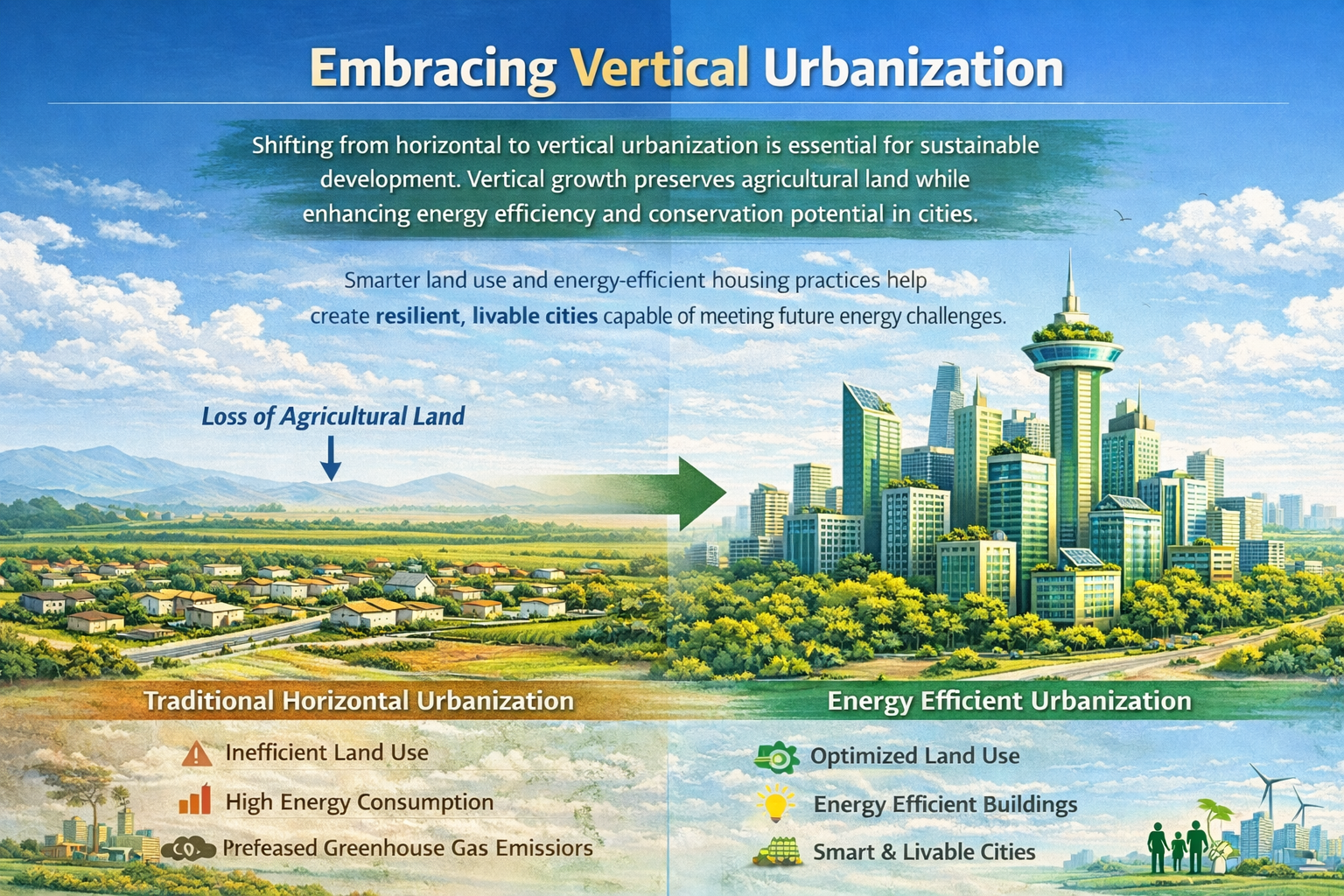
Rapid urban expansion has led to a surge in construction activities and energy consumption. Traditional horizontal urbanization spreads cities across large areas, resulting in inefficient land use and the loss of valuable agricultural land.
By prioritizing energy efficiency in buildings and urban planning, Pakistan can reduce energy consumption, lower greenhouse gas emissions, and create healthier and more comfortable living environments for its citizens.
NEECA is transforming Pakistan’s building sector by implementing the Energy Conservation Building Code (ECBC-2023) and integrating it into provincial building bylaws. These standards ensure energy efficiency in both new construction and existing buildings through well-defined retrofitting techniques.
ECBC-2023 addresses key components such as building envelopes, HVAC systems, and lighting. Compliance with these codes ensures that buildings are energy efficient from design to operation.
Shifting from horizontal to vertical urbanization is essential for sustainable development. Vertical growth preserves agricultural land while enhancing energy efficiency and conservation potential in cities.
Smarter land use and energy-efficient housing practices help create resilient, livable cities capable of meeting future energy challenges.
One of NEECA’s flagship initiatives is the establishment of Energy Efficiency & Conservation Cells across all DISCOs. These cells focus on capacity development, enabling power sector organizations to effectively plan and implement energy efficiency measures.
By strengthening institutional capacity and building technical expertise, NEECA is driving the widespread adoption of energy-saving practices across Pakistan’s power distribution system.
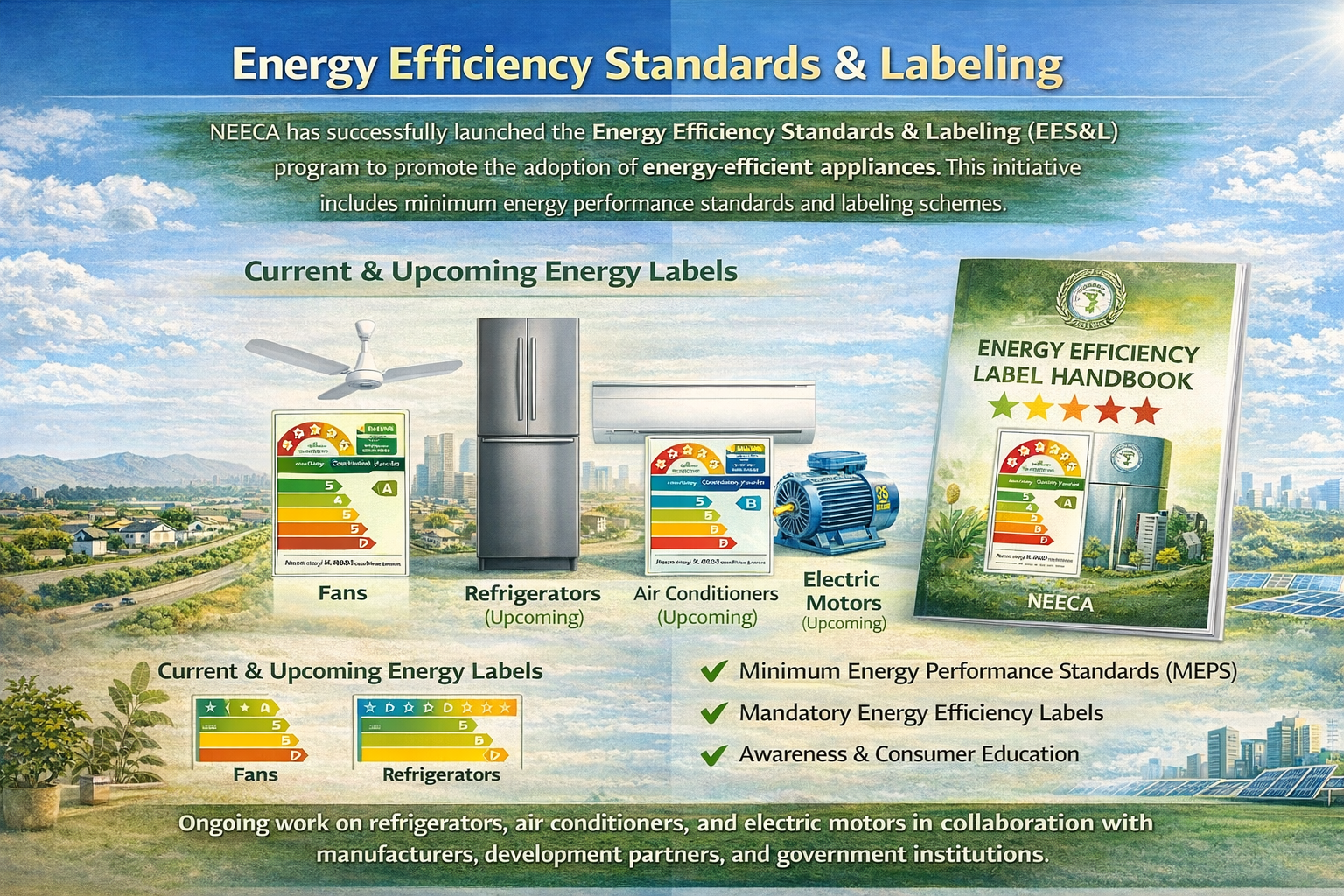
NEECA has successfully launched the Energy Efficiency Standards & Labeling (EES&L) program to promote the adoption of energy-efficient appliances. This initiative includes minimum energy performance standards and labeling schemes.
Energy labeling has already been introduced for fans, with ongoing work on refrigerators, air conditioners, and electric motors in collaboration with manufacturers, development partners, and government institutions.
Energy efficiency reduces transmission and distribution losses, improves system performance, lowers operational costs, and enhances power system reliability. It also plays a critical role in reducing emissions and mitigating climate change impacts.
By saving energy, Pakistan can reduce its energy import bill, strengthen energy security, and unlock economic growth opportunities across multiple sectors.
You can support Pakistan’s energy transition by upgrading to energy-efficient appliances, adopting smart energy management practices, and supporting initiatives that promote efficiency across buildings and the power sector.
Together with NEECA and other stakeholders, we can build a more reliable, affordable, and resilient energy system. Small actions today can lead to a cleaner and more energy-smart Pakistan for generations to come.
Follow us on the following Links